Skip to main content Skip to main navigation Skip to page navigation Skip to search
Home

Top navigation main

  • News & media
  • Jobs
  • Ministers
  • Contact us
Main menu

AWE Main

  • Climate change
    Climate change Driving climate action, science and innovation so we are ready for the future.
    • Climate science and adaptation
    • Australia's climate change action
    • Reducing emissions
    • Emissions reporting
    • International climate action
    • Climate Active
    • Climate change publications and data
    • Australia’s National Greenhouse Accounts (Emissions Data)
  • Energy
    Energy Building a secure and sustainable energy system for all Australians.
    • Australia's energy strategies and frameworks
    • Energy and Climate Change Ministerial Council
    • Renewable energy
    • Reducing transport emissions
    • Energy data
    • Energy efficiency
    • Energy markets
    • Energy programs
    • Energy security
    • Energy supply
    • Energy workforce
    • Women in energy
    • International activity
    • Energy publications
  • Environment
    Environment Improving stewardship and sustainable management of Australia’s environment.
    • Biodiversity
    • EPBC Act
    • Environment Information Australia
    • Environmental markets
    • International environment
    • Invasive species
    • Land
    • Marine
    • Protection
    • Report a breach of environment law
    • Threatened species & ecological communities
    • Waste and recycling
    • Wildlife trade
  • Water
    Water Improving the sustainable management of Australia’s water supply for industry, the environment and communities.
    • Coal, Coal seam gas (CSG) and water
    • Commonwealth Environmental Water Holder
    • National Water Grid
    • Water policy and resources
    • Wetlands
    • Publications
  • Parks and heritage
    Parks and heritage Managing Australia’s iconic national parks, historic places and living landscapes.
    • Australian Marine Parks
    • Australian National Botanic Gardens
    • Booderee National Park
    • Kakadu National Park
    • Christmas Island National Park
    • National parks
    • Norfolk Island National Park
    • Heritage
    • Pulu Keeling National Park
    • The Great Barrier Reef
    • Uluṟu-Kata Tjuṯa National Park
  • Science and research
    Science and research Undertaking research and collecting data to support informed decisions and policies.
    • Climate change
    • Australia's biological resources
    • Australian Biological Resource Study (ABRS)
    • Bird and bat banding
    • Supervising Scientist
  • About us
    About us We lead Australia’s response to climate change and sustainable energy use, and protect our environment, heritage and water.
    • Accountability and reporting
    • Assistance, grants and tenders
    • Contact us
    • Fees and charges
    • News and media
    • Publications
    • Our commitment to you
    • People and jobs
    • What we do
    • Who we are
    • Initiatives
  • Online services
    Online services We do business with you using online platforms. This makes it easier for you to meet your legal requirements.
Department of Climate Change, Energy, Enviroment and Water

Breadcrumb

  1. Home
  2. About us
  3. News and media
  4. Cultural water: a connection to Country, culture and community
Skip to main content

Back to news - AWE

  • Back to news
Skip to page navigation

Cultural water: a connection to Country, culture and community

  • Video
  • Water
  • First Nations
21 July 2026
Decorative image

The Committee on Aboriginal and Torres Strait Islander Water Interests (CAWI) has produced a video about the cultural importance of water for Aboriginal and Torres Strait Islander peoples.

The term ‘cultural water’ describes the many ways Aboriginal and Torres Strait Islander peoples value, use and care for water. 

Water supports:

  • Country 
  • culture
  • spirituality
  • identity
  • health and wellbeing
  • economic self-determination
  • the environment.

Water helps people stay connected to Country. It provides for cultural practices, knowledge sharing, trade and economic opportunities.

For Aboriginal and Torres Strait Islander peoples, water is much more than a resource. It is a living connection to Country, culture and ancestors: linking past, present and future generations.

In this video, CAWI members share their views on cultural water. They explain why it is important for keeping culture, Country and communities strong.

Watch the video to learn about the importance of cultural water to First Nations peoples.

What is cultural water

(Visual – title slide, text reads CAWI – Committee on Aboriginal and Torres Strait Islander Water Interests. What is Cultural Water)

(Visual – aerial view of waterfall cascading over rocky landscape, text on screen reads Buluwai Country)

Water is really significant in our culture because it does supply the foundation of not only life but our stories. Stories that teach us. So understanding water, understanding its values, not just cultural values, natural values ecological values, they all equal cultural values in our minds. And that's why it's so critical, but also that it is the very basis of some of our

(Visual - Sarah Wilcox sitting with lush greenery behind, text on screen reads Sarah Wilcox, Palawa, CAWI member)

significant creation stories. And keeping those alive is really important for our future generations –

(Visual – aerial view of waterfall cascading over rocky landscape, text on screen reads Buluwai Country)

- to know really forming part of their identity and being strong in their identity, their language and who and how they are with Country

(Visual - landscape of tree covered hills)

because we are Country and Country is us.

(Visual - Nathan Brennan sitting with water and bush behind, text on screen reads Nathan Brennan – Gumbaynggirr, Bundjalung, Gamilaraay, CAWI member)

From my father's side, so water is associated with the Rainbow Serpent, which is a really important songline that travels across all of Australia. And so what happened was, the Rainbow Serpent, in the creation he travelled the country, you know, he created the rivers, he went underground, he created the basins, he come up to breathe,

(Visual - landscape of tree covered hills, text on screen reads Buluwai Country)

he created the water holes.

(Visual - Nathan Brennan sitting with water and bush behind)

And so we taught our young people about the Rainbow Serpent because if they were able to follow the path of the Rainbow Serpent, they would always be able to find water. And so it didn't just

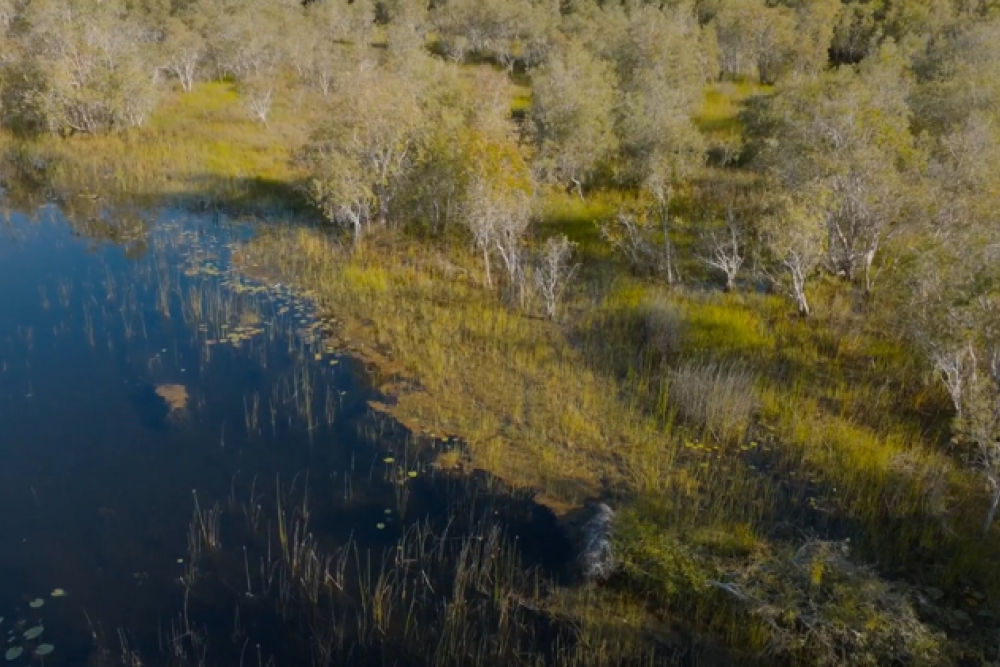
(Visual - aerial view of wetlands, text on screen reads Nyul Nuyl Country)

have a spiritual connection, it had practical meaning in our world as well as part of our knowledge systems and how we passed on that knowledge to our young people. So it really formed the foundations of how young people learnt and connected with their country and with their elders to learning those stories from their elders and having that knowledge passed on.

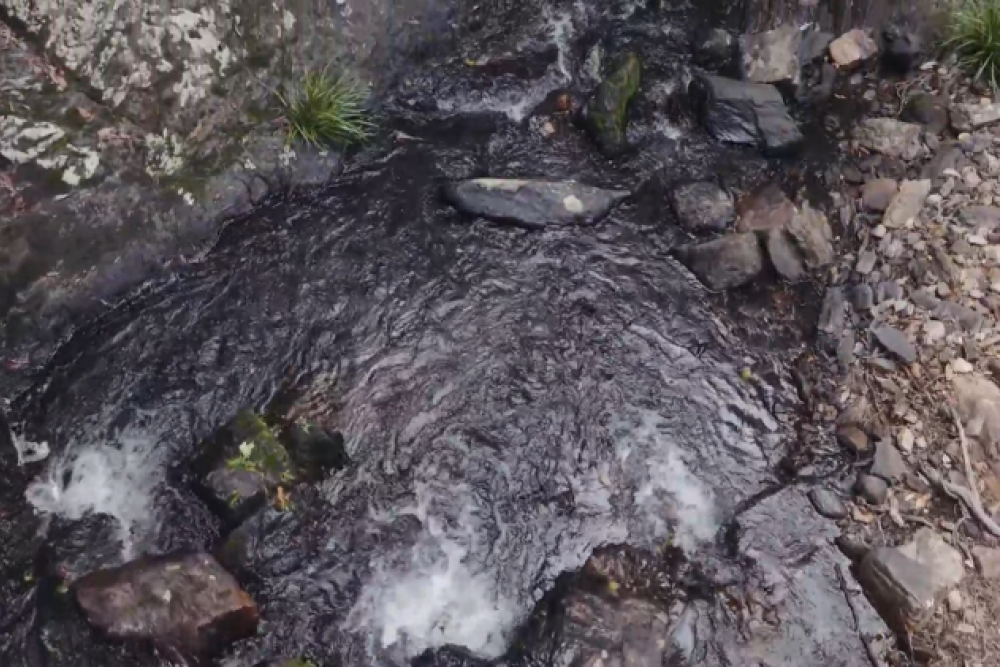
(Visual - aerial view of rock landscape with creek running through it, text on screen reads Buluwai Country)

Our kinship expands beyond just humans, but it expands to everything within our natural world, to the trees, to the fish, to water, to mountains. So, certain landscapes as well.

(Visual – John Locke sitting with greenery behind, text on screen reads: John Locke – Kuku Yaranki, Yidinji, Former CAWI member)

The customary water is not just the landscape being designed by the creator spirits, but the laying down of the traditional lore and custom that is associated with it.

(Visual - creek with rocks on one side and dense bush on the other, text on screen reads Djabugay Country)

So that's the lore You hear people talk about L-O-R-E and L-A-W. That's the importance of the setting down of those traditional lores and customs.

(Visual – close shot of water flowing around a small bank with plants growing on it, text on screen reads Kungarakan Country)

For us as people, cultural water to me is then that next stage as humans come into the landscape.

(Visual - picture fades to end screen, text reads “With thanks to:, Sarah Wilcox, Nathan Brennan, John Locke. For further information, including current membership, visit our website: https://www.dcceew.gov.au/water/policy/first-nations/cawi)

  • Share on Facebook
  • Share on LinkedIn
  • Email
  • Copy link

Related

Decorative image

The role of CAWI in shaping Australia's water future

  • Video
  • Water
21 July 2026
Decorative image

Cultural water rights: First Nations voices in water management

  • Video
  • Water
21 July 2026
Decorative image

The enduring importance of water for First Nations peoples

  • Video
  • Water
21 July 2026
All news
Thanks for your feedback.
Thanks! Your feedback has been submitted.

We aren't able to respond to your individual comments or questions.
To contact us directly phone us or submit an online inquiry

CAPTCHA
This question is for testing whether or not you are a human visitor and to prevent automated spam submissions.

Please verify that you are not a robot.

Skip
dcceew energy art

Footer

  • Contact us
  • Accessibility
  • Disclaimer
  • Privacy
  • FOI
  • Copyright
Last updated: 05 August 2026
DCCEEW footer 06.02.2024

Connect with us

Facebook Instagram LinkedIn

We acknowledge the Traditional Owners of Country throughout Australia and recognise their continuing connection to land, waters and culture. We pay our respects to their Elders past and present.

© Department of Climate Change, Energy, the Environment and Water