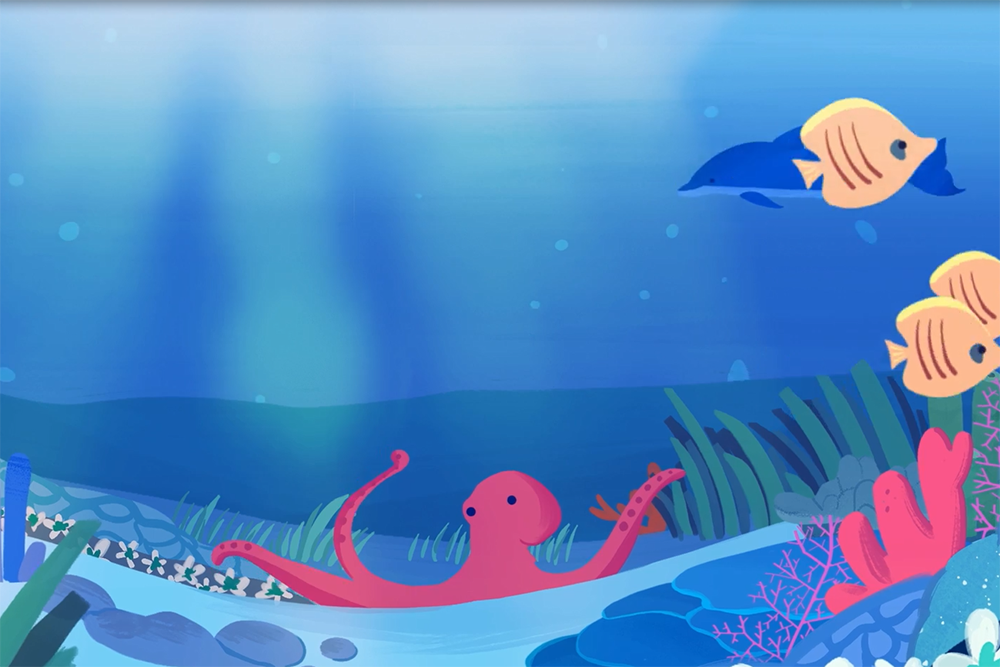
Poor water quality impacts the health of the Reef. It also affects the Reef's ability to resist and recover from other stressors.
Nutrient and sediment run-off from the land within the Reef catchment contributes to poor water quality.
Australia invest in programs that are reducing nutrient, sediment and pesticide run-off into inshore Reef habitats.
We also invest in programs to monitor water quality and progress towards our Reef water quality targets.
(background music)
Description: An aerial view of a river running past farms to an estuary river mouth with mangroves flowing out to the ocean.
Narrator: Water quality is essential to the health of the Great Barrier Reef.
Description: Cut to a view under the waves of a mangrove and seagrass bed off the coast of Queensland. A dugong, clownfish, and several other sea creatures swim by. The vibrant coral reef is full of life and activity.
Narrator: So how do we protect it?
Description: A satellite view of a map of Queensland highlights the catchment areas. Flowing rivers appear at random, connecting until they all flow out into the ocean and Reef.
Narrator: Human activities within 35 inland water catchments affect the health of the Great Barrier Reef.
Description: Bird-eye view of green farmland covered mostly by patches of trees with a river running through. As the narrator speaks, trees begin disappearing. Farms, paddocks with animals, roads and cars begin appearing. Bare soil erosion flows from each of these additions into the river.
Narrator: Land clearing and certain farming practices cause soil and chemicals to run off into the Reef.
Description: Cut back to a view under the waves of the ocean. A brown cloud of sediments, fertilisers, and other pollutants hover over the fish and reef. All the marine life swims away and green algae begin covering the reef. The water is now dull and murky, full of floating bits of algae.
Narrator: These sediments, fertilisers, and other pollutants smother our corals and block their sunlight, increasing algal growth.
Description: We travel through a vibrant mangrove with a dugong, turtle, schools of fish, and fish eggs in the seagrass. A dark cloud of sediment and pollutants floats through the water. This cloud drives marine life away, leaving an alga covered area unfit for breeding.
Narrator: They weaken the growth of sea grasses and mangroves that sea turtles, fish, dugongs, and other marine life need as vital breeding ground.
Description: A close up of a crown-of-thorns starfish slowly crawling up and over living coral. In its wake is a trail of dead and whitened coral. As the camera continues to pan across the reef, we see barren and bleached coral reef, devoid of marine life.
Narrator: And they create the perfect conditions for crown-of-thorns starfish outbreaks that destroy coral colonies. This all reduces the resilience of the Reef to withstand future damage from climate change.
Description: We are now on the shore watching tourists on a marina. On the water is a business fishing boat, a recreational fisher is near the wharf, a boat ride owner is on the dock talking to interested tourists, and a master reef guide is talking to children about turtles.
Narrator: Poor water quality also impacts reef-dependent industries such as tourism, fishing, recreation, and scientific research.
Description: A dark reef scene plays in the background as six circles appear containing people representing each of the groups the narrator mentions. As the circles appear, the background ocean scene gets lighter.
Narrator: To address this challenge, we’re working with natural resource managers, Traditional Owners, farmers, land holders, reef guardians, local government, and non-government organisations to turn the tide on water quality.
Description: The scene cuts to a degraded barren riverbank with a wetland in the landscape. Soil trails flow from the bare soil bank into and down the fast flowing river. The river slows down as elements of restoration build up, giving the riverbank and wetland a chance to grow more vegetation which stops the flow of soil down the river.
Narrator: We’re investing to repair and rehabilitate catchment areas to slow the movement of water into the Reef by restoring riverbanks, stream banks, gullies, waterways, and wetlands.
Description: An educator talks about preventing pollutants from getting into the rivers with partnered farmers on their farm with their kelpie dog. Icons representing methods, profitability, and sustainability appear as the educator keeps talking to the farmers. The camera zooms in further as the educator continues talking about pollutants and biodiversity.
Narrator: And we’re helping farmers to reduce runoff of soil, fertiliser, and pesticides which can also improve profitability and sustainability. The aim is to reduce pollution from agriculture, urban and public land, and increase biodiversity.
Description: We are back to the aerial view of a river running past farms to an estuary river mouth with mangroves, flowing out to sea. The camera pans back down under the ocean waves. Dugongs, octopuses, several types of fish and a vibrant coral reef flow through the camera view. Icons representing tourists and industry appear along with two bubbles that say, “2m+ Tourists Per Year” and “60k Jobs Per Year”.
Narrator: Improving the quality of water flowing to the Great Barrier Reef helps to restore coastal ecosystems, vital for more resilient and healthy coral. A healthy Reef also supports the livelihood of Australians through tourism, jobs, and our economy.
Description: The icons disappear, and life begins popping up everywhere along the coral. Two scuba divers swim among a turtle, octopus, manta ray and other marine life. Narrator: Together, let’s protect our Great Barrier Reef for present and future generations.
Description: The Australian Government logo, Reef Trust logo, website URL, clown fish and sea turtle appear.
Narrator: Visit our website to find out more about the program and see how you can help.