Skip to main content Skip to main navigation Skip to page navigation Skip to search
Home

Top navigation main

  • News & media
  • Jobs
  • Ministers
  • Contact us
Main menu

AWE Main

  • Climate change
    Climate change Driving climate action, science and innovation so we are ready for the future.
    • Climate science and adaptation
    • Australia's climate change action
    • Reducing emissions
    • Emissions reporting
    • International climate action
    • Climate Active
    • Climate change publications and data
    • Australia’s National Greenhouse Accounts (Emissions Data)
  • Energy
    Energy Building a secure and sustainable energy system for all Australians.
    • Australia's energy strategies and frameworks
    • Energy and Climate Change Ministerial Council
    • Renewable energy
    • Reducing transport emissions
    • Energy data
    • Energy efficiency
    • Energy markets
    • Energy programs
    • Energy security
    • Energy supply
    • Energy workforce
    • Women in energy
    • International activity
    • Energy publications
  • Environment
    Environment Improving stewardship and sustainable management of Australia’s environment.
    • Biodiversity
    • EPBC Act
    • Environment Information Australia
    • Environmental markets
    • International environment
    • Invasive species
    • Land
    • Marine
    • Protection
    • Report a breach of environment law
    • Threatened species & ecological communities
    • Waste and recycling
    • Wildlife trade
  • Water
    Water Improving the sustainable management of Australia’s water supply for industry, the environment and communities.
    • Coal, Coal seam gas (CSG) and water
    • Commonwealth Environmental Water Holder
    • National Water Grid
    • Water policy and resources
    • Wetlands
    • Publications
  • Parks and heritage
    Parks and heritage Managing Australia’s iconic national parks, historic places and living landscapes.
    • Australian Marine Parks
    • Australian National Botanic Gardens
    • Booderee National Park
    • Kakadu National Park
    • Christmas Island National Park
    • National parks
    • Norfolk Island National Park
    • Heritage
    • Pulu Keeling National Park
    • The Great Barrier Reef
    • Uluṟu-Kata Tjuṯa National Park
  • Science and research
    Science and research Undertaking research and collecting data to support informed decisions and policies.
    • Climate change
    • Australia's biological resources
    • Australian Biological Resource Study (ABRS)
    • Bird and bat banding
    • Supervising Scientist
  • About us
    About us We lead Australia’s response to climate change and sustainable energy use, and protect our environment, heritage and water.
    • Accountability and reporting
    • Assistance, grants and tenders
    • Contact us
    • Fees and charges
    • News and media
    • Publications
    • Our commitment to you
    • People and jobs
    • What we do
    • Who we are
    • Initiatives
  • Online services
    Online services We do business with you using online platforms. This makes it easier for you to meet your legal requirements.
Department of Climate Change, Energy, Enviroment and Water

Breadcrumb

  1. Home
  2. About us
  3. News and media
  4. Restoring Tasmania’s Mersey River estuary
Skip to main content

Back to news - AWE

  • Back to news
Skip to page navigation

Restoring Tasmania’s Mersey River estuary

  • News
  • Environment
  • Biodiversity
  • Threatened
23 September 2026
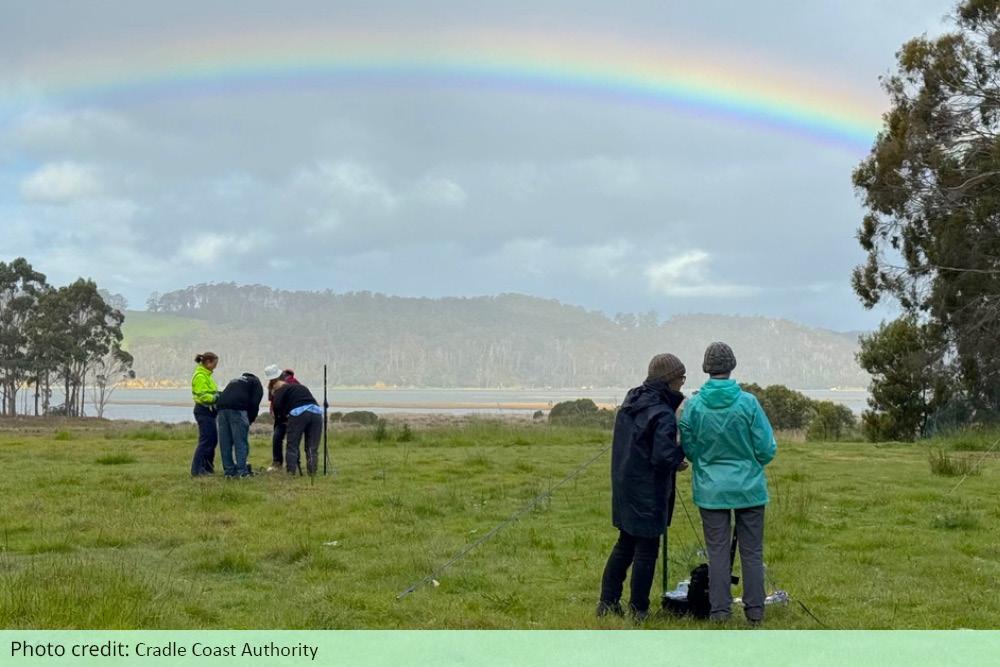
Call Trackers workshop monitoring the bird species at Mersey River Estuary.
Call Trackers workshop monitoring the bird species at Mersey River Estuary Credit: Cradle Coast Authority.

World Rivers Day is celebrated on the fourth Sunday of September. It is a chance to celebrate the rivers and estuaries that support people, wildlife and healthy ecosystems.

In Tasmania, the Australian Government’s Urban Rivers and Catchments Program is helping restore the Mersey River estuary.

The Mersey River is home to several threatened species, including:

  • the eastern curlew – a long-distance migratory shorebird
  • the Australasian bittern – a wetland bird
  • the Australian grayling – a native migratory fish.

The estuary faces a major threat from rice grass. Rice grass is an introduced weed that spreads rapidly across tidal mudflats, taking over important feeding areas for wading birds and fish. It can also change the way water moves through an estuary, while smothering vulnerable coastal saltmarsh habitat.

The restoration team is working to remove rice grass and improve the health of the estuary.

This includes:

  • using drones to spray rice grass
  • tackling weeds and restoring native vegetation
  • trapping pollution before it reaches the estuary
  • engaging locals to monitor bird species.

The good news is that removing rice grass can help native saltmarsh recover and restore important habitat for estuarine fish – with research showing these benefits can be seen within just a few years.

The project is also helping build the resilience of critical migratory bird habitat in the face of threats such as H5 avian influenza.

This project is funded by the Australian Government’s Natural Heritage Trust under the Urban Rivers and Catchments Program, with the support of Cradle Coast Authority, the Bookend Trust and Devonport City Council.

Read more

  • Urban Rivers and Catchments Program
  • World Rivers Day
  • Share on Facebook
  • Share on LinkedIn
  • Email
  • Copy link

Related

ocean with the rocky shore to the right

Expressions of interest open for National Ocean Advisory Group

  • News
  • Climate change
21 October 2026
Ducks on water

Port Phillip Bay Ramsar wetlands site expanded

  • News
  • Environment
19 October 2026
Decorative image.

Meet the people and programs protecting the Reef

  • News
  • Environment
19 October 2026
All news
Thanks for your feedback.
Thanks! Your feedback has been submitted.

We aren't able to respond to your individual comments or questions.
To contact us directly phone us or submit an online inquiry

CAPTCHA
This question is for testing whether or not you are a human visitor and to prevent automated spam submissions.

Please verify that you are not a robot.

Skip
dcceew energy art

Footer

  • Contact us
  • Accessibility
  • Disclaimer
  • Privacy
  • FOI
  • Copyright
Last updated: 24 September 2026
DCCEEW footer 06.02.2024

Connect with us

Facebook Instagram LinkedIn

We acknowledge the Traditional Owners of Country throughout Australia and recognise their continuing connection to land, waters and culture. We pay our respects to their Elders past and present.

© Department of Climate Change, Energy, the Environment and Water