


Heritage list
National Heritage List, inscribed 16/08/2024
Location
Ford Street, Beechworth, VIC, Australia
Summary
In North East Victoria, bordering the Victorian Alps, lies the historic town of Beechworth. During the 1850s gold rush, Beechworth was home to the Ovens goldfields.
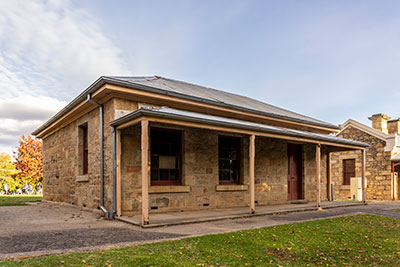
Established by the Colony of Victoria in 1853, the Beechworth Administrative Precinct’s buildings tell our story of the 1850s gold rush. Australia’s environment and people have felt the lasting impact of this point in history.
Image gallery


Select the thumbnail to open the image in a larger view.
- More images the Australian Heritage Photographic Library.
A symbol of our pioneering past
During the 1850s gold rush, temporary camps emerged in Beechworth. Over time, it became a permanent township, home to some of the richest goldfields in Victoria.
Overlooking the Spring Creek diggings, the Precinct served as a reminder to the miners that the government was watching. The government was responsible for taxing and policing the miners.
Once gold was found, it was managed by the Gold Warden’s Office. Communication with the outside world was through the Telegraph Office. Miners who committed a crime found themselves at the courthouse or gaol. These buildings show how people lived and worked on Australian goldfields.
The Beechworth Administrative Precinct still has many of its original buildings including the:
- Telegraph Office
- Courthouse
- Beechworth Gaol
- Gold Warden’s Office
- Chinese Protectorate Office
- Sub Treasury Gold Office.
Chinese history on the goldfields
The 1850s gold rush sparked the first wave of migration from China to Australia. Chinese miners travelled across Australia to work on the goldfields. They worked alongside American, European and Australian gold miners. Conflict between the miners sometimes resulted in riots.
In 1856, a Chinese Protectorate system was implemented in the Colony of Victoria. This meant Chinese miners were swiftly subjected to anti-Chinese legislation. It allowed government control over Chinese migrants. This policy saw Chinese miners mistreated by the government more so than their American, European and Australian counterparts.
In 1858, the Colony of Victoria established a Chinese Protectorate Office in Beechworth. The building is now the only surviving symbol of this government policy in Australia.
First Nations people during the gold rush
The Dhudhuroa-Waywurru, Bangerang, Yaitmathang, Dhudhuroa Dargal and Yorta Yorta people have lived in the Beechworth area for thousands of years.
The gold rush resulted in major impacts on First Nations people and Country. The gold rush stripped many First Nations people of their land. The mines destroyed water sources and traditional meeting grounds.